
Uncategorized
Difference Between Sharara and Gharara Suit
Let’s explore the captivating world of South Asian fashion with the key difference between sharara and gharara suits, where the sharara and gharara reign as symbols of grace and style.
Though their flowing forms often lead to them being admired in the same breath, a closer look reveals unique design stories woven into their fabric. Curious to discover the delightful distinctions that set these two elegant ensembles apart?
Table of Contents
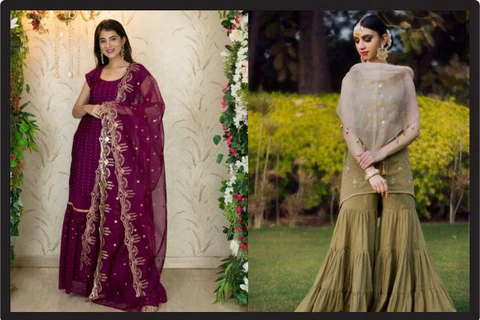
Understanding Sharara and Gharara
What is Sharara?
A sharara consists of wide-legged pants with flare from the waist, resembling a flowing skirt. These pants are typically paired with a short or long kurti and a dupatta. The continuous flare from the waist to the hem gives the sharara a graceful appearance.
Fabrics like chiffon, georgette, and silk are commonly used, often adorned with light embroidery or embellishments.
See >>> Sharara Unstitched Dresses
What is Gharara?
Gharara pants are fitted from the waist to the knees, where they flare out dramatically due to a gathered seam. This seam, often embellished with lace or embroidery, creates a structured and voluminous look.
Ghararas are traditionally paired with a short kurti and a dupatta. They are usually crafted from heavier fabrics like brocade, silk, or velvet and feature intricate embroidery.
7 Key Difference Between Sharara and Gharara Suits
| Feature | Sharara | Gharara |
| Pant Structure | Flared from the waist without a seam | Fitted to the knee, then flared with a seam |
| Flare Style | Continuous, flowing flare | Structured, voluminous flare starting at the knee |
| Fabric Choice | Light fabrics like chiffon, georgette, silk | Heavier fabrics like brocade, silk, velvet |
| Embroidery | Light to moderate embellishments | Heavy, intricate embroidery |
| Pairing | Short or long kurti with dupatta | Short kurti with dupatta |
| Occasions | Suitable for both casual and formal events | Primarily worn for formal occasions like weddings |
| Origin | Mughal era | Awadh region, particularly Lucknow |
Styling Tips
- Sharara:
Ideal for festive occasions and semi-formal events.
Pair with a long kurti and minimal jewelry for a graceful look. - Gharara:
This is best suited for weddings and formal gatherings.
Combine with a short, embellished kurti and statement jewelry to enhance the overall look.
You might also find trending lawn dress designs interesting.
Choosing Between Sharara and Gharara
When deciding between a sharara and a gharara, consider the event’s formality, your comfort, and personal style preferences.
Shararas offer a more relaxed fit, making them versatile for various occasions. Ghararas, with their structured design, are perfect for a statement at formal events.
Conclusion
Sharara and gharara are elegant South Asian pants, differing mainly in their leg style.
Sharara pants are wide-legged and flare out from the waist, offering a continuous flow.
Gharara pants, however, are fitted from the waist to the knees before dramatically flaring out. This knee flare is often highlighted with embellishments.
FAQs
What is the main difference between sharara and gharara pants?
Sharara pants flare out from the waist without a seam, while gharara pants are fitted to the knee and then flare out with a seam.
Can shararas be worn for weddings?
Yes, shararas can be worn for weddings, especially when made from luxurious fabrics and adorned with appropriate embellishments.
Are ghararas comfortable for long events?
Ghararas, made from heavier fabrics, may be less comfortable for extended wear compared to shararas. However, their structured design offers a regal appearance suitable for formal occasions.
Which is more suitable for casual gatherings?
Shararas are more versatile and can be styled for casual and formal events, making them suitable for casual gatherings.
How do I accessorize a gharara outfit?
Pair your gharara with traditional jewelry like jhumkas or a maang tikka, and opt for embellished footwear to complete the look.
